

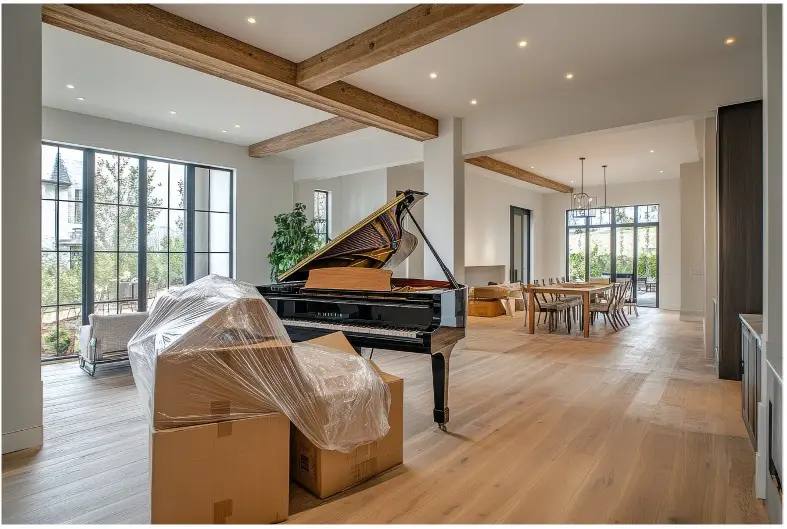
A time comes when life gets complicated. Maybe you’re between homes. You might be relocating to a more compact space that can’t accommodate the baby grand. Or you’ve inherited a piano but don’t have room for it yet. For one reason or another, you suddenly find yourself faced with a question that sounds simple but really isn’t: How do you store a piano?
Here’s the thing — pianos were never meant to be stored. They were built to live in climate-controlled homes, to be played regularly, to exist in stable environments. But sometimes storage becomes necessary. And when it does? The decisions you make in the next few weeks can determine whether your instrument comes out in playable condition… or needs thousands of dollars in restoration work.
Why Storage Environments Matter More Than You’d Think
Your piano is basically a giant wooden box filled with felt, metal, and incredibly precise mechanical parts. The soundboard — that’s the big wooden piece that makes the sound louder — swells up when it gets humid and shrinks when it’s dry. And we’re not talking huge changes here, but when you’ve got over 200 strings pulling with nearly 20 tons of force, even tiny movements create problems.
Piano technicians will tell you that bad storage causes more long-term damage than almost anything except actual water damage. Warped soundboards. Cracked bridges. Tuning pins that won’t stay tight. Rusty strings. Hammers that don’t work right anymore. Even the cabinet can literally come apart at the seams.
And here’s the really frustrating part — this damage happens slowly. You stick your piano in a regular storage unit for three months during summer, and when you get it back, it might seem totally fine. Six months later? The tuning won’t hold. A year later? Notes are buzzing. Two years down the road, you’re looking at serious repair bills because things have deteriorated beyond simple fixes.
The money you spend on proper storage almost always costs less than fixing a piano that got damaged in cheap storage. Trust me on this one.
Climate Control Isn’t Optional
Let’s be honest about climate-controlled storage: it costs more. Sometimes a lot more. And when you’re already paying to store something that weighs half a ton, that extra cost hurts.
But regular storage units get crazy hot in summer — like 120°F hot in a lot of places. And freezing cold in winter. The humidity? All over the place. 80% when it rains, then down to 20% when it’s dry.
Your piano needs stable temperatures. Around 68-72°F all year. And humidity between 42-50%. These aren’t random numbers — they’re based on decades of figuring out what keeps pianos healthy.
Climate-controlled facilities keep things steady. Temperature stays put. Humidity gets managed. Your piano doesn’t get stressed out, which means it comes out of storage in decent shape.
Can you store a piano without climate control? Yeah, technically. Should you? Only if you’re okay with possibly needing a full tune-up and adjustment afterward (easily $500-1,500) or even soundboard repair (thousands).
Getting Your Piano Ready for Storage
Most people think storage starts when the piano goes into the unit. Actually, it starts way earlier.
Should you tune it first? This seems weird — why tune something you’re not going to play? But having a tech look at it means finding problems before storage. Small issues can turn into big ones while sitting there, and you want documentation of how the piano looked beforehand for insurance reasons.
That said, some techs say don’t bother tuning before storage since you’ll need to tune it again afterward anyway. So maybe the compromise is having someone inspect it and give you a written report without doing a full tuning. Take photos. Document everything.
Then you’ve got to clean it. This actually matters more than you’d think.
Dust inside a piano attracts moisture, which makes the metal strings rust faster. It also gives you organic material that can attract bugs during storage. Yeah, bugs. We’ll get to that nightmare in a minute.
Clean means vacuuming inside the piano carefully, wiping down the keys properly, getting rid of any junk near the soundboard. For uprights, you’re opening the top and bottom panels. For grands, you need someone who knows what they’re doing so they don’t damage anything.
The outside needs attention too. Use actual piano polish, not regular furniture polish — that stuff can wreck the finish. This creates a protective layer that helps during storage.
Getting It to Storage Without Wrecking It
Here’s where things often go wrong right away: people treat the move to storage casually because “it’s just going into storage, not into a home.”
Wrong. So wrong.
The move to storage needs the same professional approach as any piano move. Maybe more, actually, since storage places often have annoying layouts — narrow hallways, sharp corners, sometimes tight freight elevators, occasionally upper floors that need stairs.
Professional movers measure everything at the storage place first. They check hallway widths, elevator sizes, plan the whole route before they try moving anything. They use real piano dollies, not furniture dollies. They wrap everything in moving blankets and secure them properly.
And this detail matters: the piano should sit on a dolly or wooden pallet in the unit, not right on the concrete floor. Concrete can leak moisture, and it’s always colder than the air. Keeping the piano up even a few inches helps protect it.
Inside the Unit: Where to Put It
So the piano’s in the unit. Now what?
Never — and I mean never — put a piano against an outside wall. Outside walls get the worst temperature swings. They’re also where water is most likely to get in. The piano should be in the middle of the unit if you can manage it, or at least against an inside wall that’s next to another climate-controlled unit.
Keep it away from vents or AC units, even in climate-controlled storage. Direct air hitting it causes uneven drying, which leads to warping and cracking.
The piano stays covered the whole time. But not with plastic — that traps moisture and creates condensation. Use breathable moving blankets or piano covers that let air move while keeping dust off.
For grands, keep the lid closed and locked. For uprights, leave the panels on. You want the inside environment as stable as possible.
The Bug Situation Nobody Wants to Talk About
Okay, let’s address something gross: mice, bugs, and other critters that might decide your stored piano looks like a great place to live.
Piano insides are attractive to mice. Enclosed space, often warm, interesting textures. And the felt hammers and dampers? Perfect nesting material from a mouse’s perspective. Once rodents get inside… the damage can be extensive. Chewed felt, droppings everywhere, even gnawed wood.
Moths are another problem. Piano felt is wool, which moth larvae love eating. A moth infestation during storage can destroy the hammers and dampers — thousands of dollars to replace.
Prevention is everything. Before storage, check the piano thoroughly for any pest signs. Put natural deterrents around (not inside) the piano — cedar blocks, moth sachets, maybe ultrasonic pest things if your facility allows them. Ask your storage place about their pest control. Good facilities treat for pests regularly, but it’s worth confirming.
Some people put moisture-absorbing packets inside the piano before storage, but this is controversial. Too much moisture absorption can over-dry the wood. If you do this, use actual piano moisture systems like Dampp-Chaser units, not random packets meant for closets.
How Long Can You Store a Piano?
There’s no magic answer, but most piano people say that once you’re past six months, you need to start thinking more seriously about long-term care.
Short storage (under three months) in good conditions usually doesn’t cause major issues. The piano comes out needing tuning, sure, but it’s structurally okay.
Medium storage (three to twelve months) needs better climate control and maybe periodic check-ins. Some piano owners have techs visit the storage unit every few months to check things, make minor adjustments, even play it a bit to keep the action from seizing up.
Long-term storage (over a year) is different. Now you’re basically mothballing an instrument, which requires serious work. Some techs say to slightly loosen the strings to reduce stress on the soundboard. Others argue against this, saying tension changes cause their own problems. There’s honestly no perfect consensus here.
Everyone agrees on this though: long-term storage needs the best climate control, regular checking, and accepting that major tuning and adjustment work will be necessary when you bring it back.
Insurance: The Boring Part That Matters When Things Go Wrong
Storage facility insurance usually covers fire and theft. Maybe water damage from facility problems. What it often doesn’t cover: damage from climate changes, pest damage, or just deterioration over time.
Your homeowner’s or renter’s insurance might cover stored stuff, but pianos — especially valuable ones — often need special additions. The standard limits might not come close to your piano’s actual value.
When moving to storage, document everything. Get a professional appraisal for valuable instruments. Take tons of photos of the outside and inside before storage. Keep maintenance records. Get written reports from techs.
And here’s something most people miss: make sure whoever moves the piano to storage has proper insurance. If it gets damaged during the move to the facility, you want clear accountability.
Bringing It Back Home
The day finally comes to get your piano out of storage. This isn’t just doing everything backward — it’s actually more delicate.
The piano has adapted to storage conditions. Now it’s going to a home, probably with different temperature and humidity. This needs to happen gradually when possible.
Once it arrives home, don’t tune it right away. Let it sit for at least two weeks, maybe a month. The wood needs time to adjust. The strings need to settle. Everything needs to adapt to the new environment.
During this time, don’t pound on it. Light playing is fine — actually helpful, keeps the action from getting stiff — but this isn’t the time for marathon practice sessions.
After it settles, get a thorough inspection and tuning from a qualified tech. Tell them upfront about the storage. They might find it needs more than tuning — maybe action regulation, hammer voicing, pedal adjustment. This is normal after storage and worth doing to get the piano back to its best.
The Real Bottom Line
Storage isn’t ideal for pianos. These things were meant to be played, to live in homes, to make music. But when storage is necessary, how you do it determines whether your piano survives in good shape or comes out needing serious work.
Climate control is non-negotiable. Good preparation matters. Professional moving protects your investment. Regular monitoring during longer storage catches problems early. And proper reintroduction when you bring it back ensures it returns to playing well.
Think about it this way: a piano can last for generations with good care. But a few months of bad storage can undo decades of maintenance. Spending money to do storage right always costs less than fixing what happens when you do it wrong.
If you’re looking for professional piano movers who understand the unique demands of these instruments, keep Modern Piano Moving in mind. Their expert team specializes in the safe, careful transport of pianos of all types and sizes. Known for their meticulous attention to detail and deep respect for each instrument’s value, they treat every piano like it’s a priceless family heirloom. Learn more at https://www.modernpiano.com/

